About The SEACAR Alliance

Discover our team, our mission, and the purpose that drives our work.

About The SEACAR Alliance

Discover our team, our mission, and the purpose that drives our work.
About the SEACAR Alliance

In 2023, the Southeast Asia Climate Adaptation and Resilience (SEACAR) Alliance was established to recognise the need for adaptation and resilience (A&R) efforts as Southeast Asia’s economic and natural assets have been increasingly at risk due to climate-related challenges such as extreme weather patterns and rising sea levels.

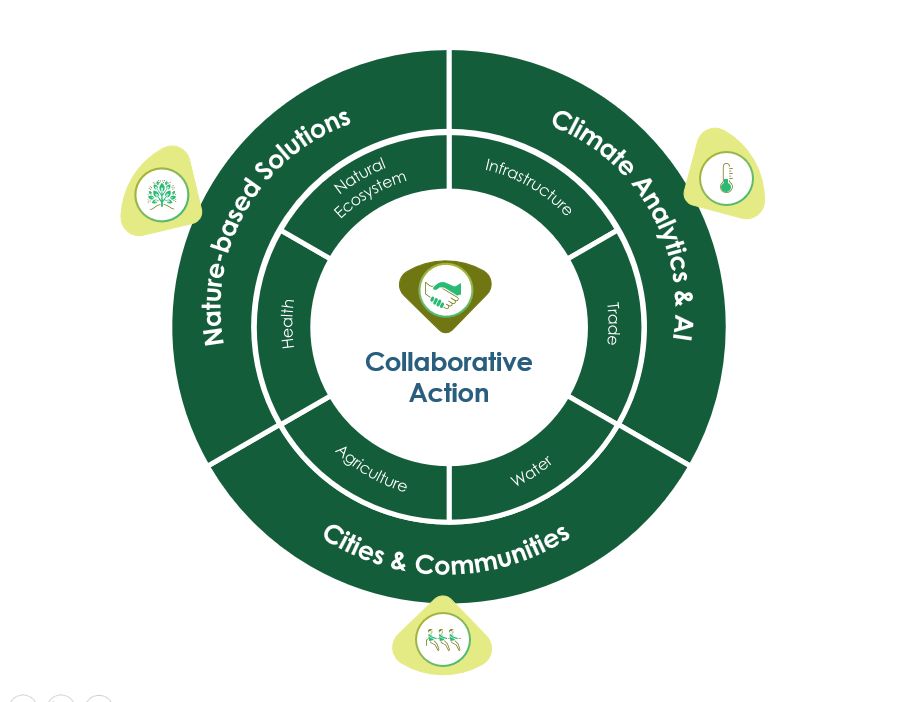
Through collaborative efforts, SEACAR aims to scale up A&R initiatives across the region, with a particular focus on urban areas to strengthen local adaptation plans that safeguard people, the economy and nature. The alliance’s approach is centred around six key themes: natural ecosystems, infrastructure, trade, water, agriculture and health. The selected themes are sectors most impacted by climate hazards in the region.

SEACAR differentiates itself from other platforms by highlighting the combined potential of nature and technology in addressing climate risks at city scale. We believe that Southeast Asia (SEA) is in a prime position to harness the power of nature, climate analytics, and technology to accelerate this endeavour, and that the actions we take in cities and communities will shape the region’s resilience in the decades ahead.

“The journey towards scaling up nature and technology for climate adaptation requires seamless cooperation between governments, civil society, private companies, and local communities.”

– Nik Nazmi Nik Ahmad
former Minister of Natural Resources and
Environmental Sustainability

Vision

Centred on collaborative action, the Alliance aims to emphasise the importance of nature-based solutions, climate analytics and technology in advancing the resilience of cities and communities across six key themes.

Pillars

SEACAR differentiates itself from other initiatives by highlighting the combined potential of nature and technology in addressing climate risks at a city scale. We believe that Southeast Asia is in a prime position to harness the power of nature, climate analytics and technology to accelerate this endeavour. The actions we take in cities and communities will shape Southeast Asia’s resilience in the upcoming decades.

Themes

Agriculture is pivotal for food security and is a major GDP and livelihood source; climate hazards can result in diminished crop and livestock productivity.

Health bears the brunt of climate adversities. This includes physical health concerns such as heat-related ailments and vector-borne diseases, mental health issues arising from displacements, and strains on health infrastructure.

Infrastructure encompasses housing, educational and healthcare facilities, transportation, and more. Climate-related events such as floods and heatwaves can damage this infrastructure, impeding economic progress and leading to community displacements.

Natural Ecosystems offer crucial services, including climate regulation, water regulation, soil stabilisation, temperature control and carbon sequestration. However, climate hazards can impair these ecosystems, limiting their capability to deliver these services.

Trade in Southeast Asia, a key artery of global supply and manufacturing, is increasingly exposed to climate risks that threaten major trade routes and value chains.

Water, vital for human survival, also serves as an economic resource in agriculture, manufacturing, and energy. Its quality and availability can be compromised by unpredictable rainfall, flooding, and other events.

Meet the SEACAR Alliance Core Partners

Dave Sivaprasad
SEA Climate & Sustainability Lead, BCG
Alia Kaz
Sustainable Finance and Adaptation & Resilience Director, BCG
Dato’ Hamdan Abdul Majeed
Managing Director,
Think City
Ahila Ganesan
Senior Advisor, Think City
Lavanya Rama Iyer
Director, Policy and Climate Change, WWF-Malaysia
Tommy Cheo Seng Kong
Climate Adaptation Coordinator, WWF-Malaysia